Emirati Dress and Modern Women’s Styles in the UAE
The elegant white robes and flowing black cloaks seen in pictures of Dubai are far more than a uniform; they are a rich language of identity, heritage, and status in Emirati attire. This iconic Emirati dress—part of traditional Emirati clothing and broader Arabic clothing—is also a brilliant adaptation to the hot desert climate, engineered for comfort and airflow in a way that modern fabrics often struggle to match. Often regarded as the Emirati national dress and a hallmark of cultural dress UAE—sometimes described as Emirati UAE traditional dress—these pieces sit within a wider tradition of Arabic traditional dress. Knowing the proper names for these garments is a sign of cultural respect and unlocks a deeper appreciation for the region.
✨ Check Out Our Latest Abayas ✨
The Kandura Explained: Details of an Emirati Man’s Attire
The centerpiece of an Emirati man’s wardrobe is the Kandura, an elegant, ankle-length robe. It is most often brilliant white, a practical choice that reflects the intense desert sun. You might also see men wearing darker, earthy tones like brown or grey during the cooler winter months when heat reflection is less of a priority.
What makes an Emirati Kandura distinct are a few key details. It features a smooth, collarless neckline and a long, braided tassel called the tarboosha that dangles from the front. This tassel is a clear marker of the Emirati style and is sometimes scented with perfume as a final touch, making the Kandura the archetypal Emirati dress male within traditional Arabic clothing.
The Kandura functions as the national equivalent of a business suit. It is worn with pride in professional settings, at formal events, and for social gatherings. Its crisp, clean lines convey a sense of dignity and respect, making it the default formal attire for Emirati men. It remains central to Emirati traditional dress and emirati attire, anchoring everyday style with cultural continuity.
Decoding the Ghutra and Agal: What an Emirati Man’s Headwear Signifies
Completing the traditional attire is the iconic headwear, which consists of two pieces. The Ghutra is the large square headscarf, held securely in place by the Agal, a thick black cord. The specific way a man wears the Ghutra can signify anything from formality for a business meeting to a more relaxed style for casual outings.
✨ Check Out Our Latest Abayas ✨
The plain white Ghutra is the year-round standard, but a red-and-white checkered version is also common, often favored during the cooler winter months for a touch of seasonal fashion.
The black Agal is more than just a fastener; it’s a piece of history. It traces its origins to Bedouin tribesmen, who used a similar rope to hobble their camels at night. What was once a purely practical tool transformed into the distinguished symbol worn today, a direct link to the nation’s desert heritage. Together, the Ghutra and Agal complete traditional Emirati clothing and are recognized across the region as part of cultural dress UAE.
The Abaya & Shayla: Understanding Elegance in Women’s Attire
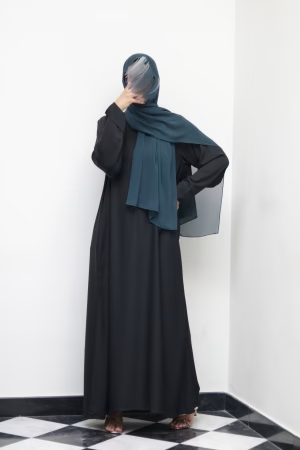
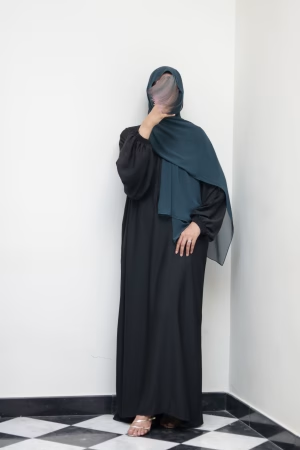
For Emirati women, the most visible element of traditional dress is the Abaya, an elegant, full-length black cloak. As an Emirati women’s dress—and a staple among Arabian outfits for women and Arabic ladies dress—it functions as a graceful outer layer worn over personal clothing in public, acting as a distinguished symbol of modesty and cultural identity. It is a sophisticated garment one puts on before stepping out, similar to a formal coat.
✨ Check Out Our Latest Abayas ✨
The Abaya is almost always paired with a headscarf known as the Shayla. This is typically a long, rectangular piece of soft, lightweight black fabric that modestly covers the hair and complements the flowing nature of the Abaya. Its understated ease remains influential in Arab women fashion.
Unlike some headscarves that are intricately folded, the Emirati Shayla is known for its simple styling. It is commonly wrapped gently around the head and draped gracefully over one shoulder, creating a look that is both modest and effortlessly fluid. For many, this pairing is the definitive Emirati dress women select for public life.
✨ Check Out Our Latest Abayas ✨
Beyond Black: How Modern Abayas Are Redefining Emirati Fashion
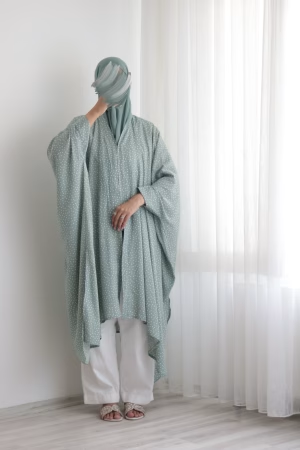
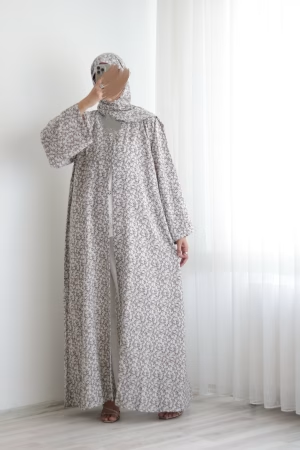
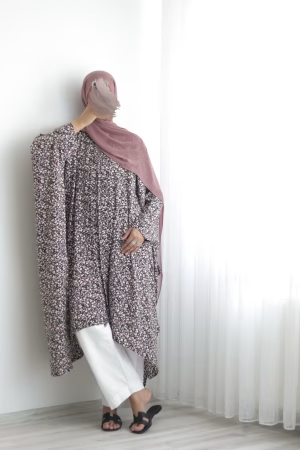
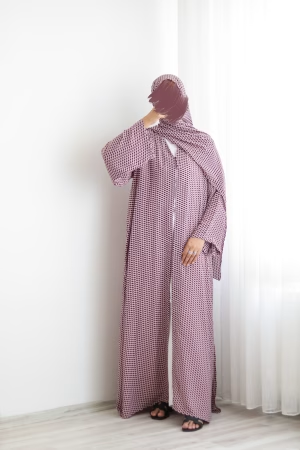
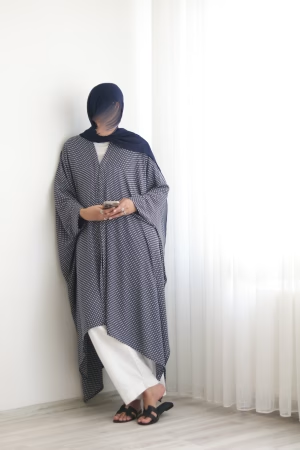
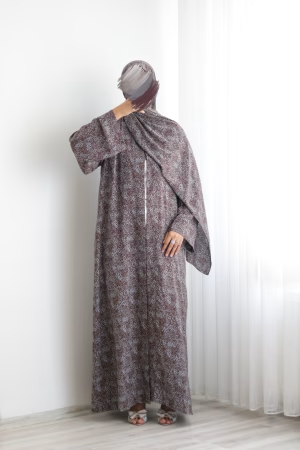
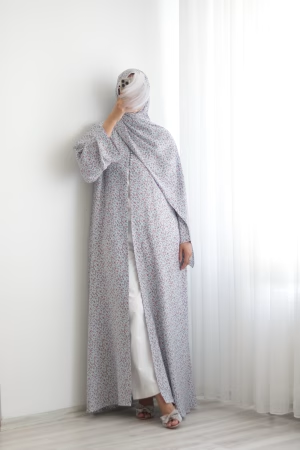
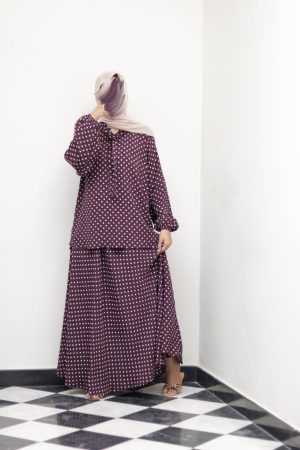
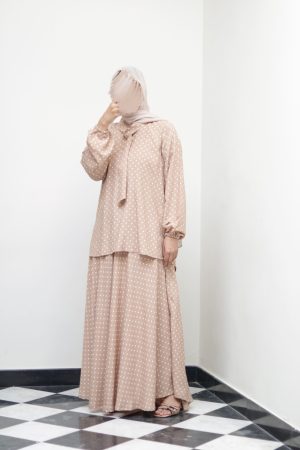
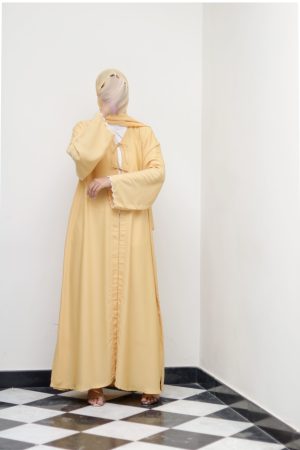
While classic black remains timeless, the modern Abaya is a vibrant canvas for personal style. In any UAE mall, you’ll see women wearing Abayas in a spectrum of sophisticated colors—from deep navy and earthy beige to soft pastels. This evolution in color, along with the use of lighter fabrics like linen for daytime wear, shows how this traditional garment is also a dynamic piece of modern fashion, reflecting evolving Emirati fashion and modern Arabic dress female trends.
Design innovations go even further. Many modern Abayas feature intricate embroidery, delicate lace trim, or subtle metallic threads. New cuts have also emerged, like the popular ‘bisht’ style, which is wider and drapes over the shoulders for a dramatic, cape-like effect. Some styles double as Arabic party wear dresses for celebrations, while others echo the relaxed flow of an Arabic maxi dress.
This creative shift powerfully demonstrates how Emirati women blend cultural heritage with global trends. By embracing new colors, textures, and cuts, they redefine the Abaya as a statement of contemporary elegance. It is proof that tradition is not static but a living form of expression and an elegant Arabian outfit female choice across contexts.
✨ Check Out Our Latest Abayas ✨
What is a Jalabiya? Your Guide to a More Colorful Arabic Dress
While the Abaya is for public life, the vibrant and beautiful Jalabiya is often worn at home or for special gatherings. This long, flowing Arabic dress—often styled like an Arabic maxi dress within Arabic clothing—is designed for color, comfort, and celebration. It serves as a stylish garment for relaxing with family or hosting guests in private and remains a beloved Emirati dress female choice.
The Jalabiya is a staple for festive occasions, family visits, and especially during Ramadan celebrations. These garments are typically made from luxurious fabrics and showcase a brilliant spectrum of color, often featuring stunning embroidery, beadwork, or bold patterns that reflect personal taste and festive spirit. As a popular Arabic dress female option within Emirati traditional dress, it bridges comfort and ornament.
The Abaya offers quiet elegance for the world outside, while the Jalabiya provides vibrant expression with loved ones. This balance between public and private presentation is a key aspect of an Emirati woman’s rich and thoughtful wardrobe, and it sits naturally within the wider current of Arabic traditional dress.
✨ Check Out Our Latest Abayas ✨
How to Respectfully Appreciate Emirati Dress as a Visitor
With an understanding of these garments, you see the story woven into the fabric—distinguishing a Kandura by its tassel and appreciating the Abaya as a statement of both identity and practical design. This cultural knowledge enriches any visit to the UAE and helps you recognize the place of traditional Arabic clothing within the broader context of Emirati national dress.
For visitors, the simplest way to show respect for the local dress code is to cover your shoulders and knees in public. This small gesture is always warmly received and shows you understand and appreciate the cultural context. When in doubt, choose modest Arabic clothing silhouettes. Seeing the culture in the clothing is a bridge to deeper understanding.