arabic dress in the UAE: traditional and modern style
Arabic Dress in the UAE: Traditional and Modern Style
That “simple” white robe you see on men across the Gulf isn’t so simple. In practice, a detail as small as the collar’s design can signal which country the wearer is from. This is just one example of the incredible diversity hidden within what many see as a single style of Arabic dress. Within middle eastern dress, these cues vary widely.
✨ Check Out Our Latest Abayas ✨
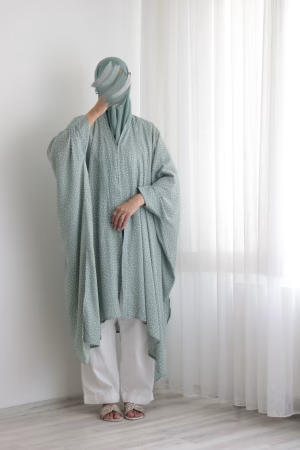
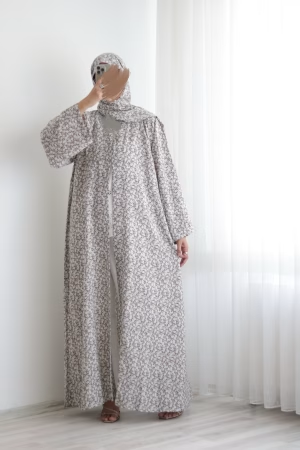
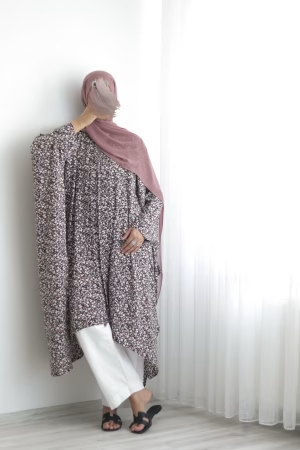
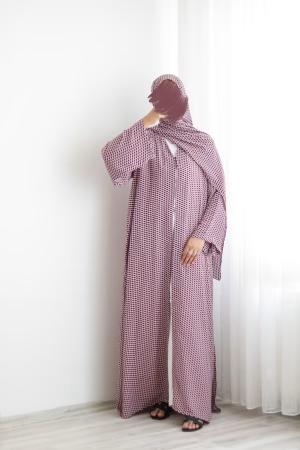
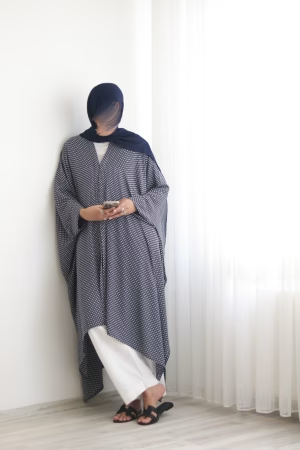
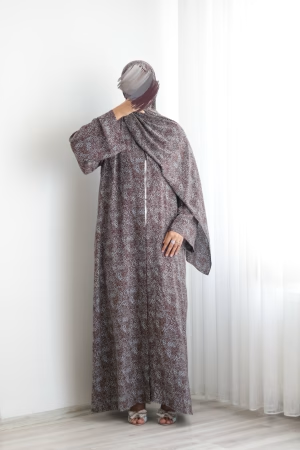
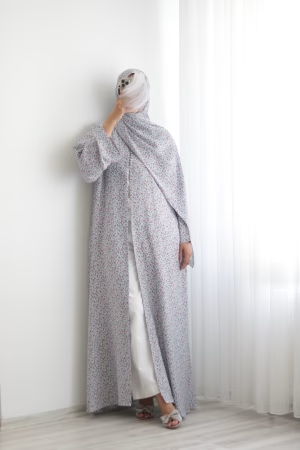
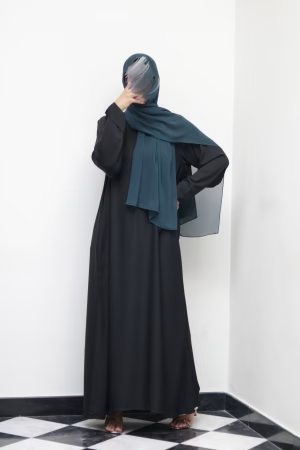
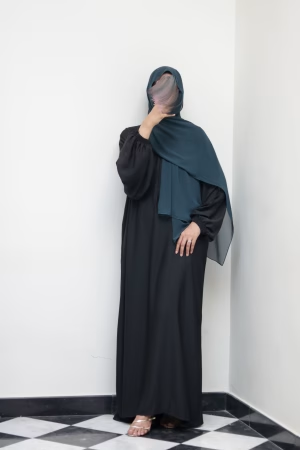
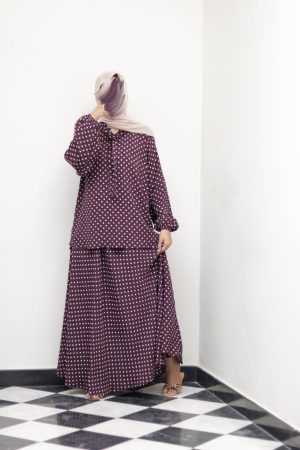
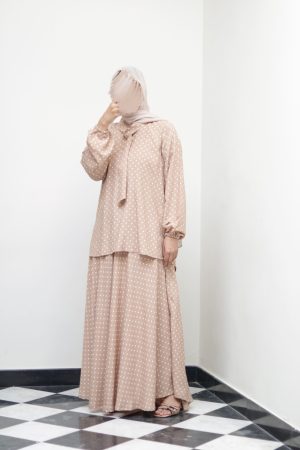
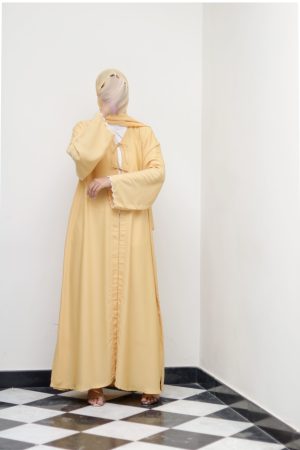
Ever wondered about the story behind this elegant Middle Eastern attire and traditional arabic attire? From the flowing black abaya worn by women to the crisp white head coverings for men, each piece has a name, a purpose, and a rich history. Far from being static, these garments are a vibrant blend of deep-rooted culture and modern fashion, with contemporary designers in the UAE reinterpreting tradition for a new generation of arabic fashion.
What Is an Abaya and How Is It Worn Today?
One of the most elegant and common outer garments is the Abaya, a flowing cloak worn by women over their other clothing. Think of it less as an entire outfit and more like a long, lightweight coat. Its primary purpose is to provide an outer layer of modesty, but it has also become a powerful fashion statement.
In many stores, you may see arabic ladies dress name listings—such as abaya, kaftan, or jalabiya—used to identify designs in arabic dress female lines. Some retailers also offer arabic dress for girl options with simplified cuts, easy-care fabrics, and age-appropriate embellishment.
While classic black Abayas remain popular, they are just the beginning. Today, designers craft them in a spectrum of colors, from soft pastels to rich jewel tones, often featuring beautiful embroidery, lace, or unique cuts. Many labels highlight these looks in modern arabic dress female collections for different seasons and occasions. This variety in modern modest Islamic clothing for summer and winter allows the Abaya to be a piece of personal expression.
This evolution has also changed how different types of Abayas are styled. Many women now wear them open at the front, showcasing a stylish outfit—like jeans and a top—underneath. In this way, the Abaya becomes a versatile third piece, adding a touch of sophistication to an everyday look in the same way a blazer or trench coat might. Some online catalogs even tag products as “arabic dress female” to distinguish women’s pieces from menswear like the Kandura.
✨ Check Out Our Latest Abayas ✨
Kaftan vs. Jalabiya: What’s the Real Difference?
Beyond the Abaya, two other popular garments are the Kaftan and the Jalabiya—the jalabiya arabic dress (also known as an arabic jalabiya dress) and the more formal Kaftan. While both are long, flowing dresses, they serve different purposes—think of it as the difference between an elegant evening gown and a comfortable sundress. The key distinction comes down to the occasion, fabric, and level of embellishment.
A Kaftan is pure celebration and formalwear, often the garment of choice for special events like weddings, holidays, or a formal Ramadan Iftar dinner. Many bridal designers adapt the Kaftan into an arabic style wedding dress, pairing luxurious textiles with intricate handwork. In contrast, the Jalabiya is all about daily comfort and casual style, perfect for relaxing at home or visiting with friends and family. Here’s a quick cheat sheet to tell them apart:
- Kaftan: Made from luxurious fabrics like silk or brocade and often features intricate, heavy embroidery or beading.
- Jalabiya: Crafted from breathable materials like cotton or linen with simpler patterns, designed for everyday wear.
While both offer beautiful, modest silhouettes, one is designed to dazzle at a special event, while the other provides effortless, daily comfort.
How to Instantly Tell Where a Man’s Thobe is From
Just as women’s attire varies by region, so does men’s traditional dress. The iconic long robe worn by men is known as a Thobe in most of the Gulf, but in the United Arab Emirates, you’ll almost always hear it called a Kandura. While they may look similar at a glance, they are not a single uniform, and small details reveal the wearer’s home country.
✨ Check Out Our Latest Abayas ✨
The secret lies in the details, especially the collar and sleeves. Much like a suit’s lapel signals a specific style, the tailoring around the neck is often the clearest giveaway of its origin.
For instance, an Emirati Kandura is typically collarless and smooth, often featuring a long, braided tassel (tarboosh) at the neckline. In contrast, the Saudi Thobe usually has a more formal, two-button collar that resembles a standard dress shirt. These subtle distinctions are a point of pride and reflect a regional identity also found in men’s head coverings.
What Are the Parts of a Man’s Head Covering Called?
The iconic headwear seen in the Gulf consists of two main parts. The cloth itself, a large square typically folded into a triangle, is called a Ghutra. It is held firmly in place by a thick, black cord known as an Agal. In the UAE and Saudi Arabia, the Ghutra is most often a crisp, plain white, though other colors are worn in cooler months.
✨ Check Out Our Latest Abayas ✨
The familiar checkered pattern belongs to the Keffiyeh. While it functions the same way as a Ghutra, the Keffiyeh’s distinctive black-and-white or red-and-white patterns often carry deep cultural meaning and symbolism, particularly in the Levant region, including Palestine and Jordan.
The Agal also has a fascinating history rooted in the practicalities of desert life. It’s said that this cord was originally used by Bedouin travelers to hobble a camel’s legs at night, preventing it from wandering off. This blend of practicality and style is a hallmark of Arabian Peninsula fashion.
How Tradition Meets Trend: Styling Modern Arabic Dress
Traditional garments are constantly evolving. Designers are reinterpreting the classic Abaya, for example, using unexpected fabrics like denim or giving them stylish, contemporary cuts. This fusion shows how the rich history of Arabian Peninsula fashion continues to inspire and adapt to global trends.
✨ Check Out Our Latest Abayas ✨
The hijab is also a powerful canvas for personal style. Women often share tips on how to style a modern hijab, using different draping techniques, colors, and fabrics to create looks that reflect their personality. Many blogs and influencers discuss modern arabic dress female trends alongside makeup and accessory choices.
For many, wearing modest Islamic clothing is a conscious choice. It is a way to connect with their heritage and express a confident, modern identity that feels authentic and personal, blending cultural pride with contemporary life.
Seeing Beyond the Stereotype: A New Appreciation for Arabic Dress
Understanding the distinctions between an Abaya and a Kaftan, or the regional details of a man’s Kandura, transforms a perceived uniform into a map of distinct styles, functions, and identities. These garments are more than just clothing; they are a vibrant expression of heritage and personal style. By looking closer at the details, one can appreciate the rich cultural significance of Middle Eastern attire and see the individual, not a stereotype.